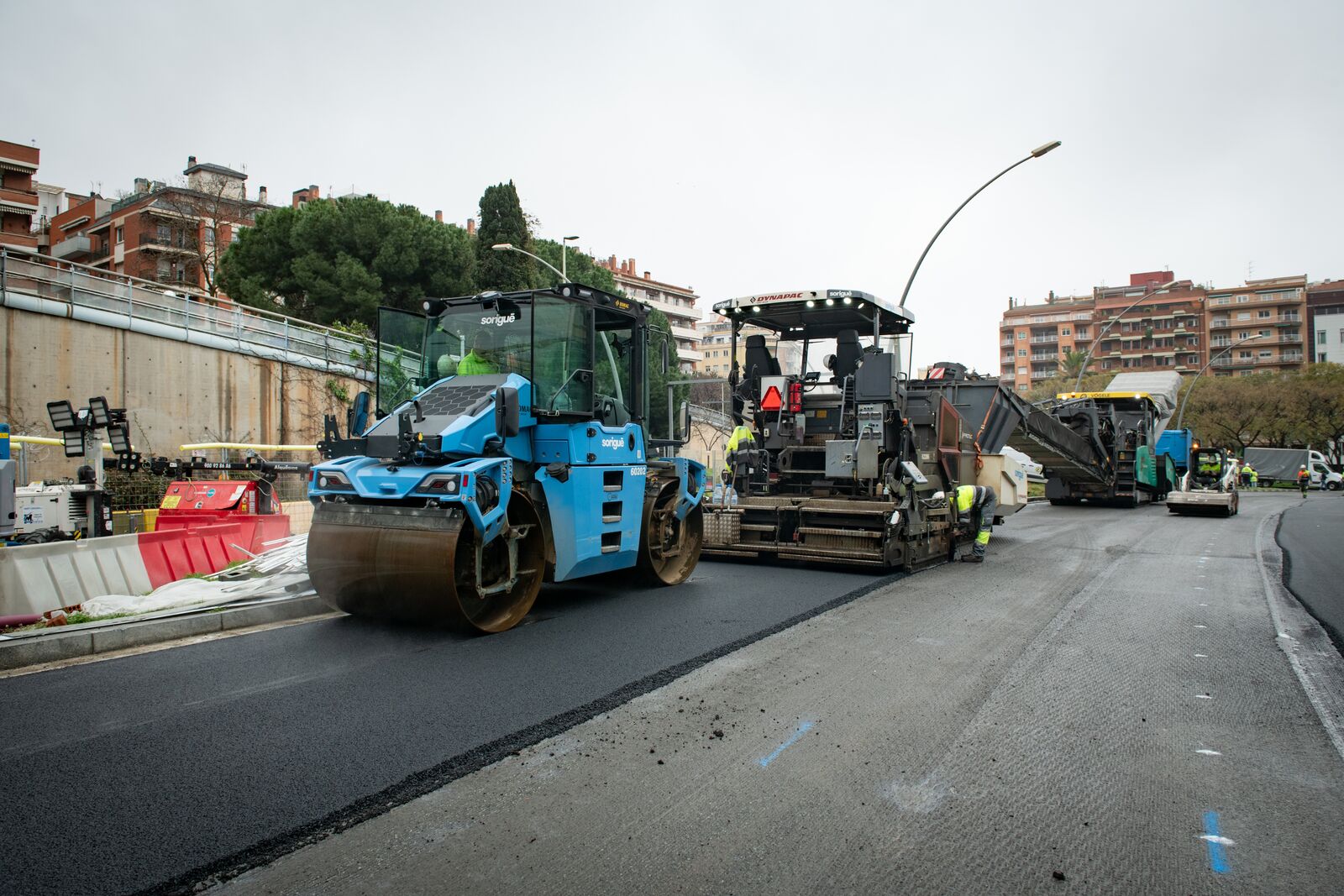
Resurfacing of the Rovira tunnel, Barcelona
Client:
BIMSA, Barcelona Municipal Infrastructures
Location:
Barcelona
Period:
2024-2026
Type of service:
Safer and with a much more durable asphalt surface. Introducing the renovated Rovira tunnel in Barcelona, resurfaced using Sorigué’s proprietary Rugofir system.
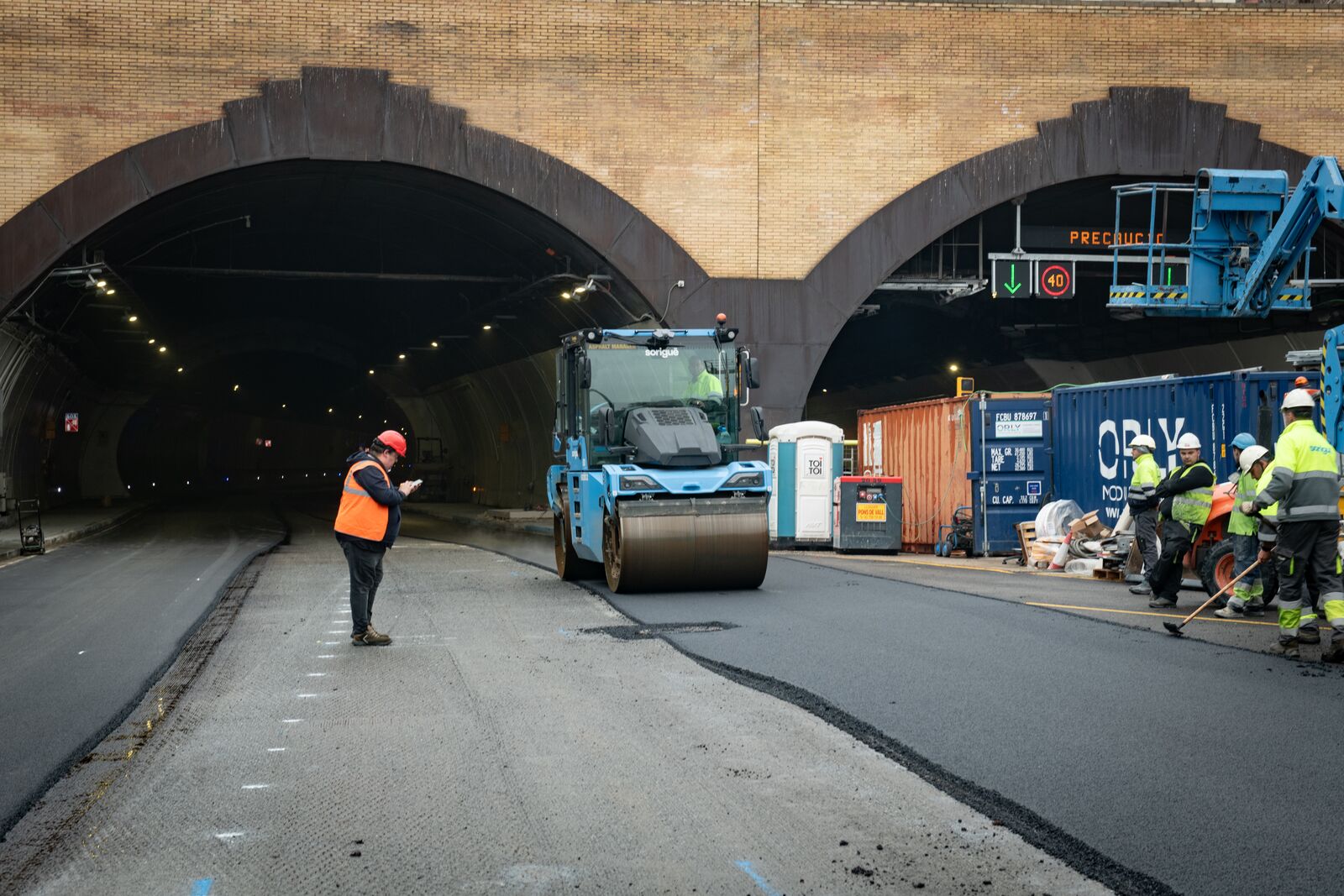
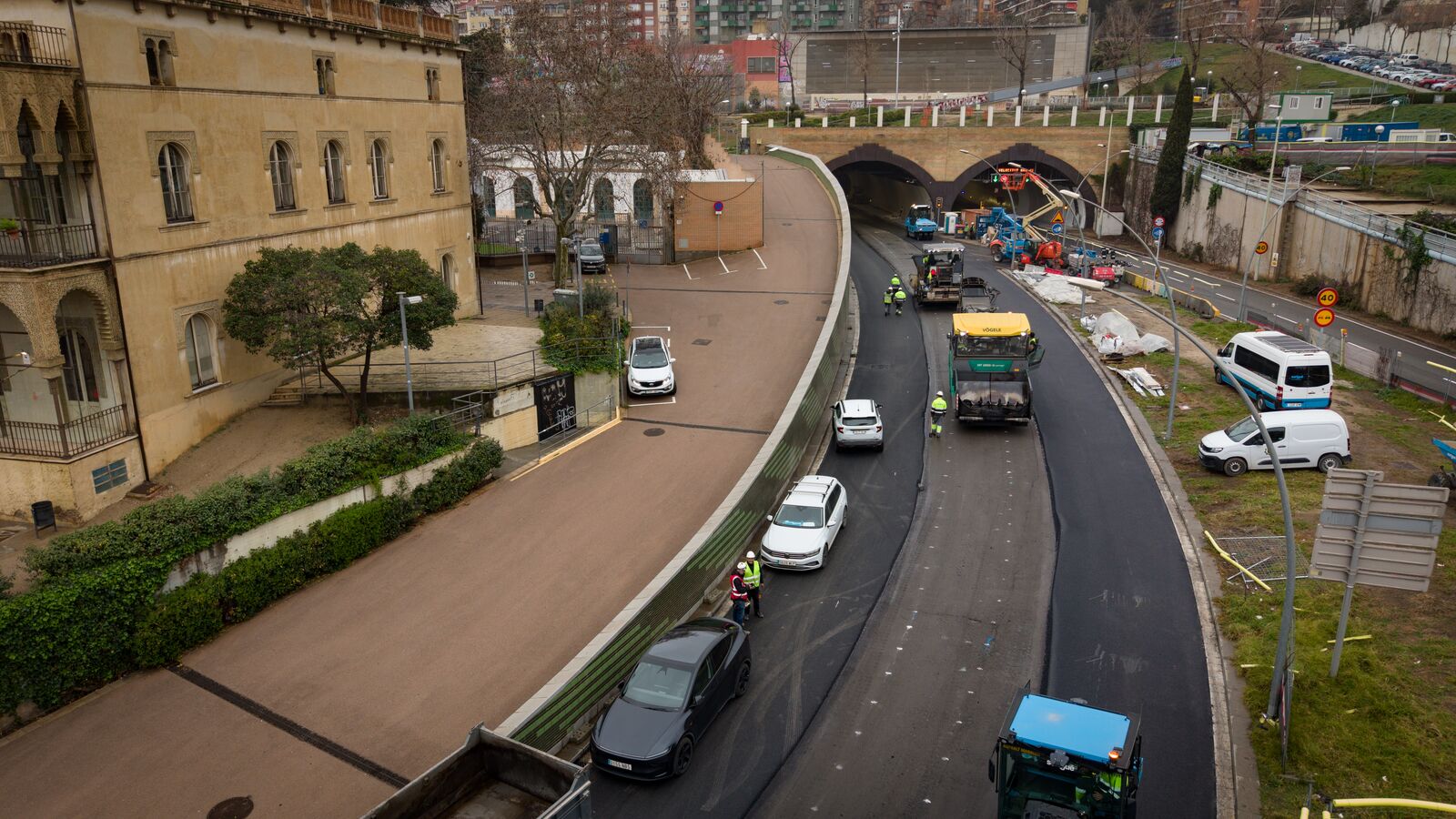
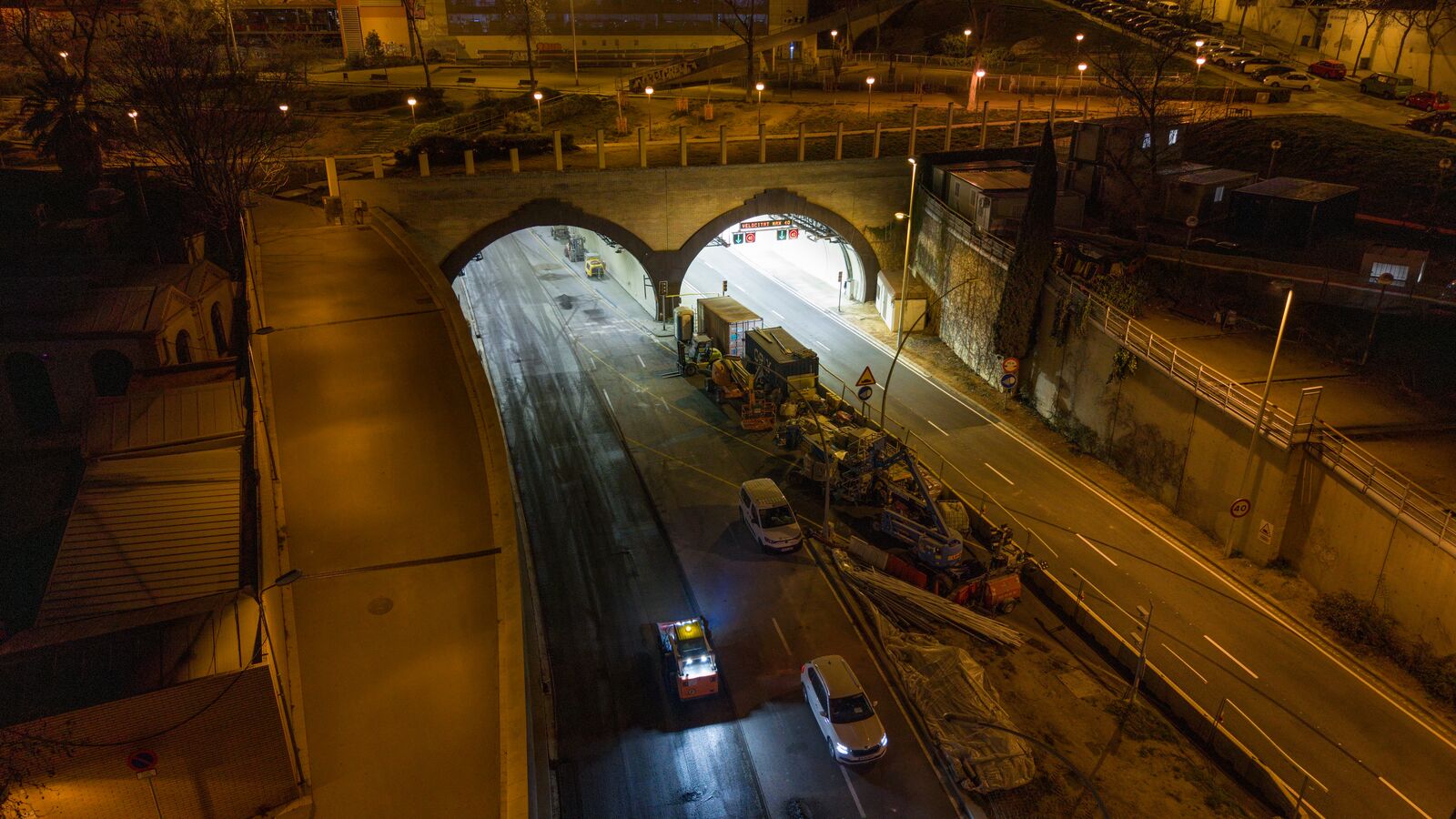
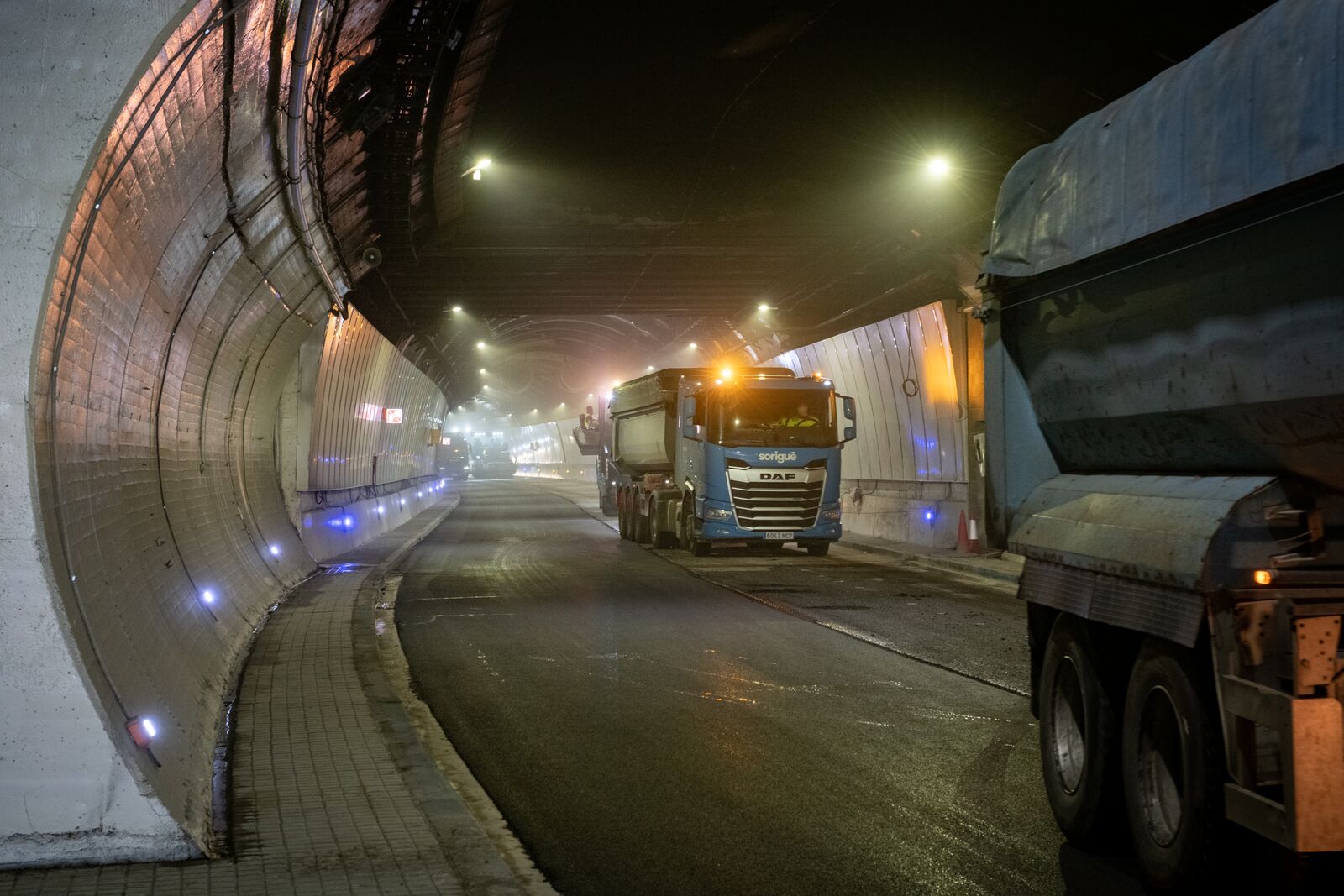
The asphalting covers the 1,300m length of the tunnel in both directions of traffic.
The road surface rehabilitation approach has optimised execution times, keeping disruptions to a minimum.
On an environmental level, the use of bituminous mixtures manufactured at lower temperatures than usual stands out, which translates into fewer CO₂ emissions. Furthermore, polymers derived from plastic waste have been incorporated into these mixtures, enabling by-products to be recovered as part of a circular economy and sustainable raw material management process.
The general intervention in the tunnel, which opened to the public in March 2026, has improved the safety of the infrastructure by treating defects and optimising the waterproofing and drainage systems, among other works.
Since its construction in 1987, the Rovira tunnel has connected the Baix Guinardó and Carmel areas, facilitating entry to and exit from Barcelona via the Ronda de Dalt.
The city council, through its company BIMSA (Barcelona Municipal Infrastructures), proposed a comprehensive renovation of the infrastructure, which is used by around 18,000 vehicles every day.
The project includes road surface renewal, the treatment of structural defects, and the optimisation of waterproofing and drainage systems, among other works.
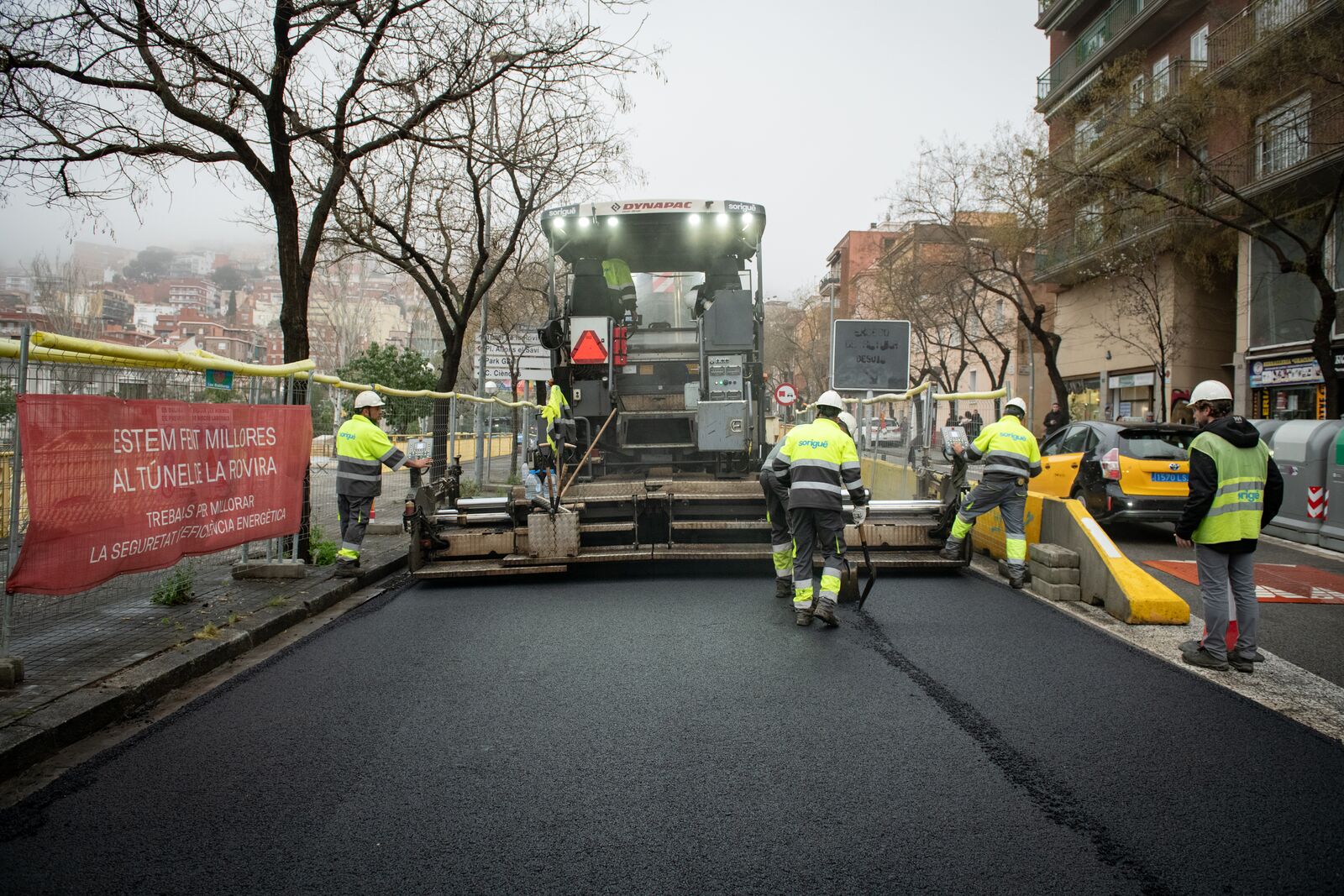
Sorigué is surfacing both lanes in each direction using its own Rugofir system. With an ultra-thin layer of hot bituminous mixture and a high bitumen content, the new asphalt ensures a running surface with high grip capacity between tyre and road.
Created in 2010 by the Product Development team within the company’s Materials area, Rugofir restores the wearing courses with minimum thickness, streamlining execution times by avoiding the costs of milling surfaces that are in good condition.
In the specific case of the Rovira tunnel, the road surface was not structurally exhausted, but rather lacked surface performance, displaying irregularities and poor grip. With the proposed solution, the new asphalting guarantees:
- Skid resistance
- Fuel-resistant properties
- Surface regularity
- Distinguishable road markings
- Better drainage
- Noise reduction
Procedure
Sorigué’s Rugofir system involves the joint application of a highly modified bitumen emulsion tack coat (Elastam) followed by an ultra-thin layer of warm bituminous mixture.
The sum of the bitumens used—both from the mixture itself and the residue of the highly modified emulsion—creates a high-adhesion mastic between layers with maximum impermeability.
Thus, the new surface remains stable against thermal changes and weather factors, retains its texture over time, and provides greater safety and reliability for driving.
Environmental benefits
In this project, Sorigué used warm mixtures, meaning their manufacturing process temperature was reduced by 40°C, resulting in lower fuel consumption and roughly 5kg less CO₂ emitted into the atmosphere.
In addition to the environmental benefits of using warm mixtures, this project incorporated Addplast asphalt mixtures, which contain polymers derived from recycled plastic waste. A commitment to the circular economy that gives the bitumen better performance, extending the lifespan of the road surface and improving its chemical fuel-resistant properties.
State-of-the-art machinery
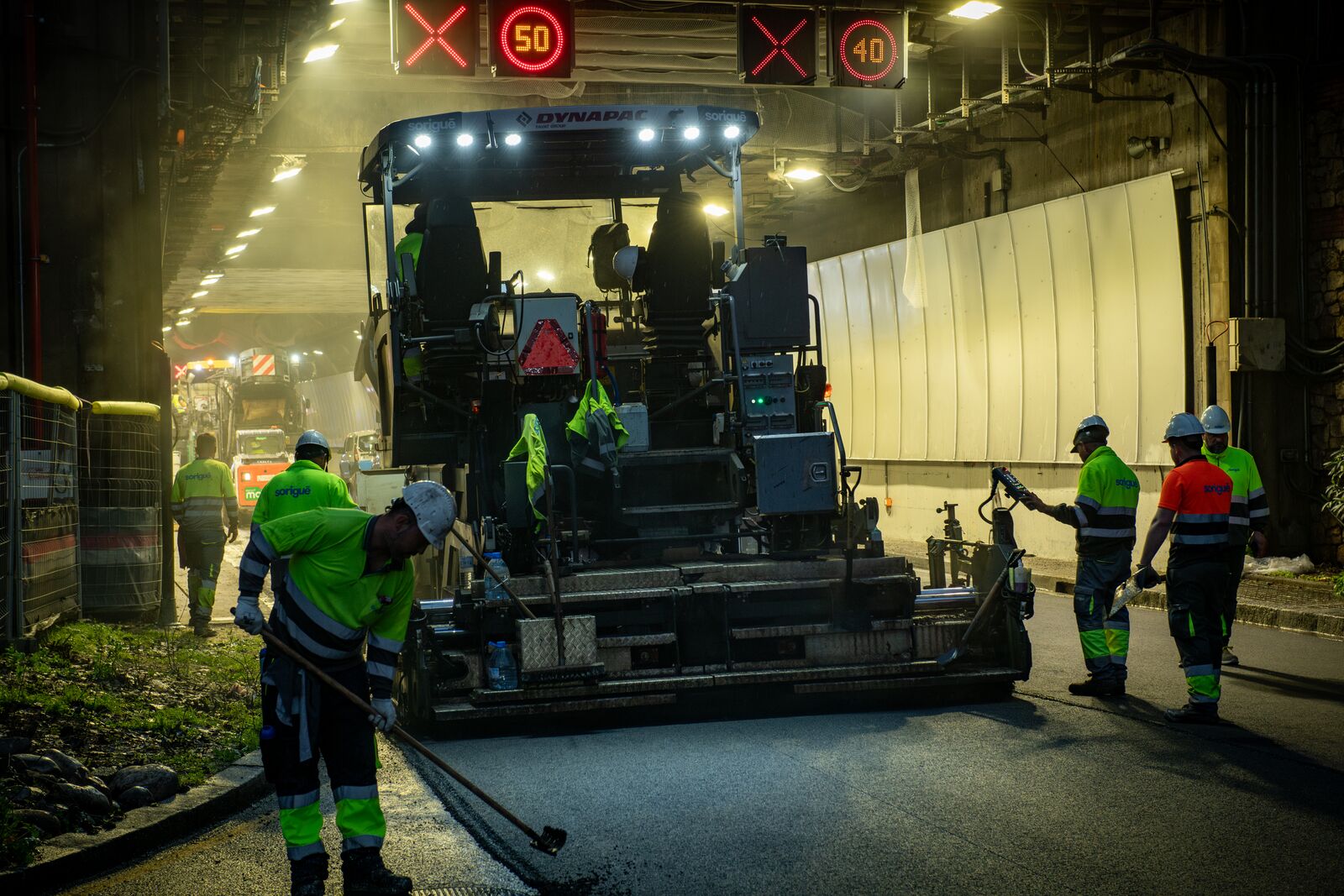
To resurface the Rovira tunnel, Sorigué used the Sprayjet paver, which is particularly suited to the Rugofir system as it allows the simultaneous tack coating and paving of the ultra-thin bituminous mixture over the entire surface.
DETAILS
Technical data
Surface area
- 1,300m in length
- 8.2-metre carriageway cross-section (two 3.6m lanes and two 0.5m hard shoulders)
- Vertical clearance: 4.75 metres.
Procedure
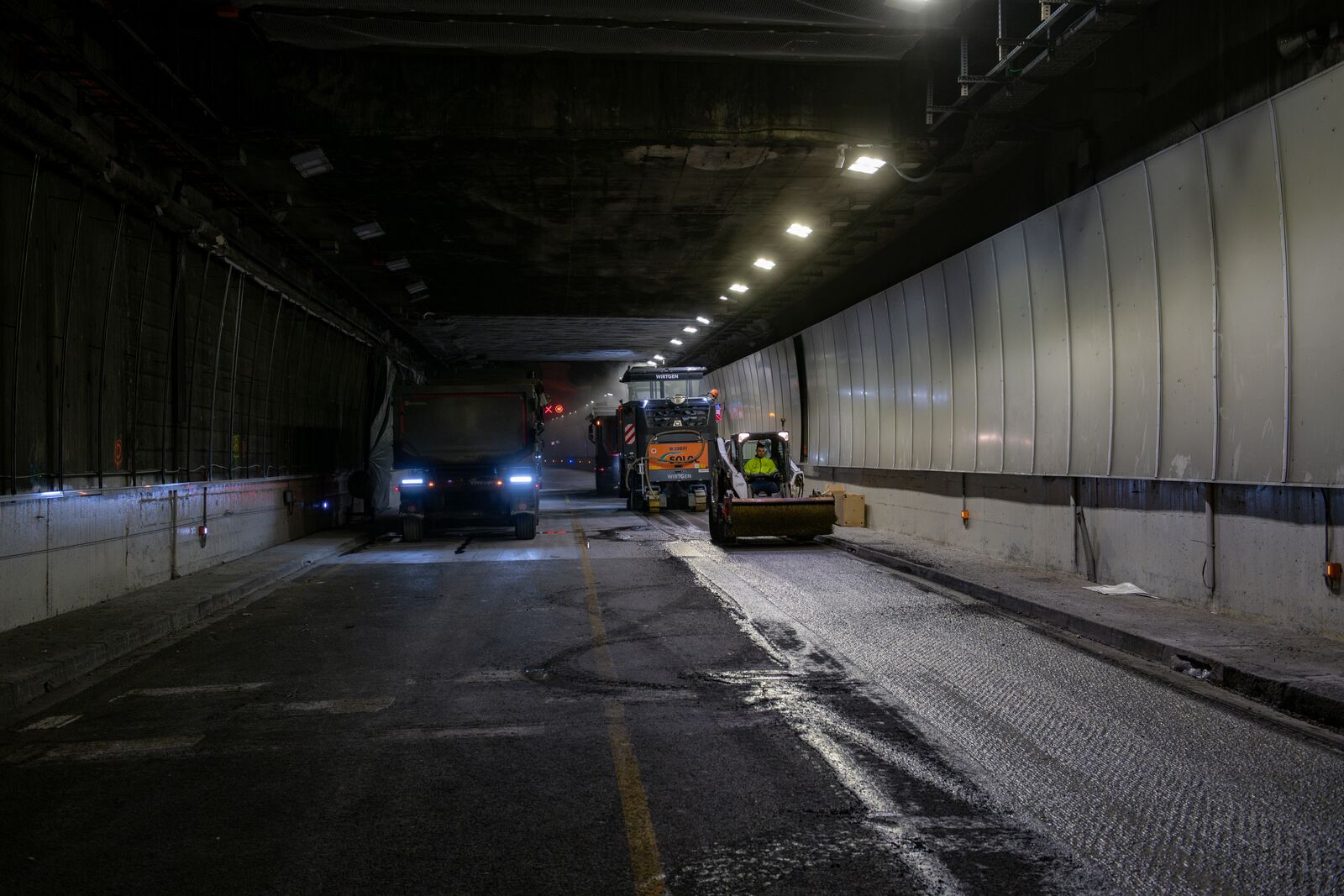
- Micro-milling of the existing road surface (1.5 cm)
- Application of a 1.5cm ultra-thin micro-surfacing mixture with a light-coloured granitic aggregate of up to 10mm.
Compaction
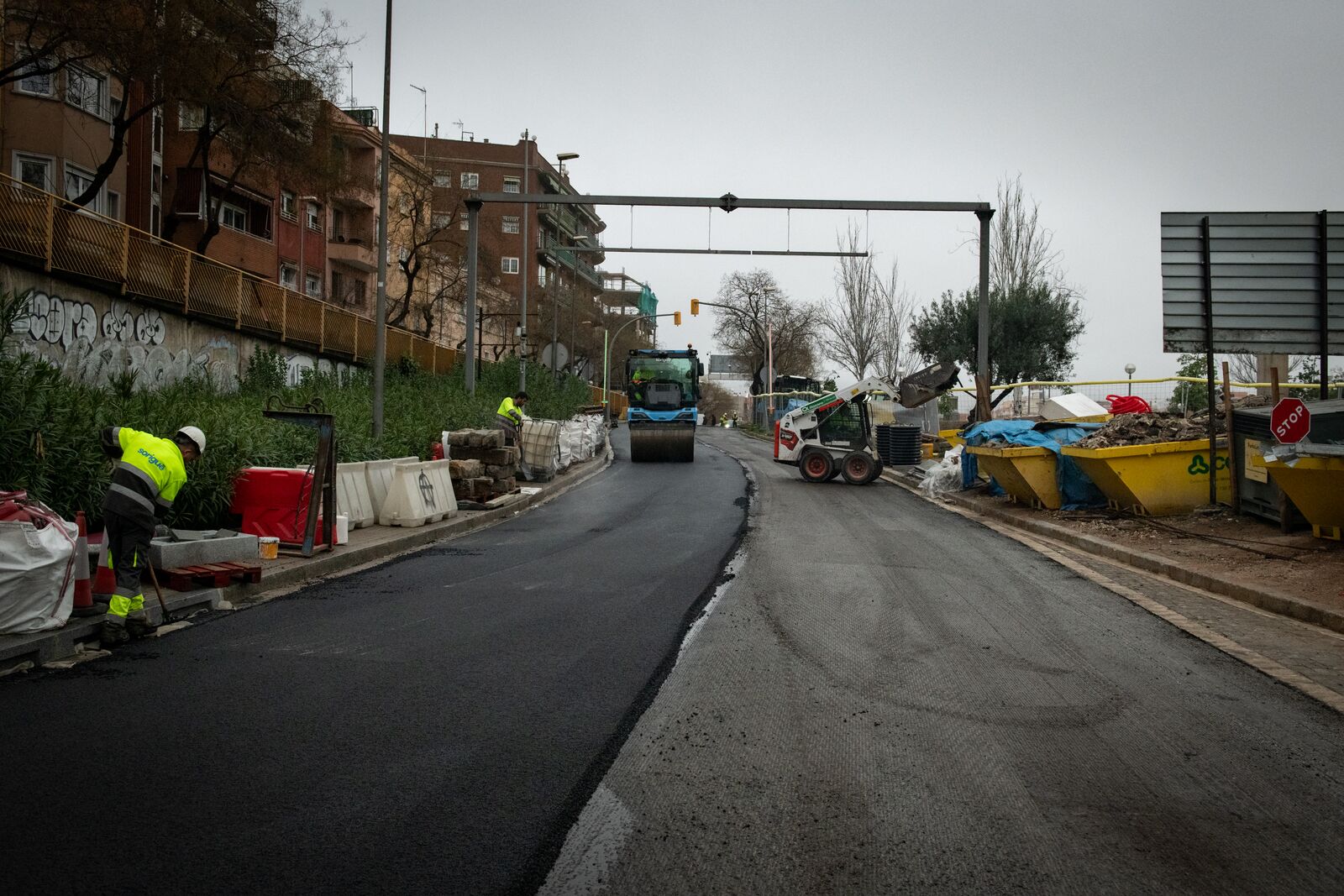
- Smooth steel-wheeled rollers
- Pneumatic-tyred roller
Gallery