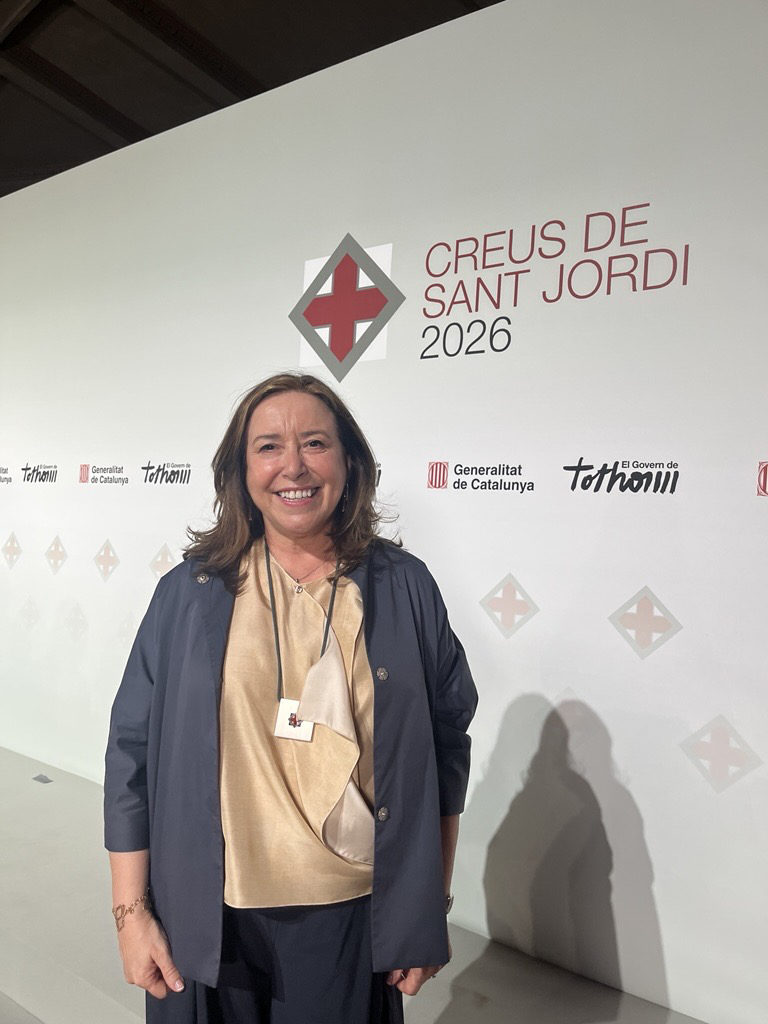
Ana Vallés Blasco receives the Creu de Sant Jordi from the Generalitat de Catalunya
Sorigué promotes certified training to incorporate new...
Sorigué consolidates its presence in Huelva with high...
Go to press room Go to News
Ana Vallés Blasco receives the Creu de Sant Jordi from the Generalitat de Catalunya
April 22, 2026
The Creu de Sant Jordi, Catalonia’s most significant institutional recognition, highlights the career of Sorigué’s president at the helm of the company and her commitment to culture and society.
The president of Sorigué and the Fundació Sorigué, Ana Vallés Blasco, has been awarded the Creu de Sant Jordi, the most prestigious recognition granted by the Generalitat de Catalunya to individuals and institutions for their civic, cultural, or social contributions.
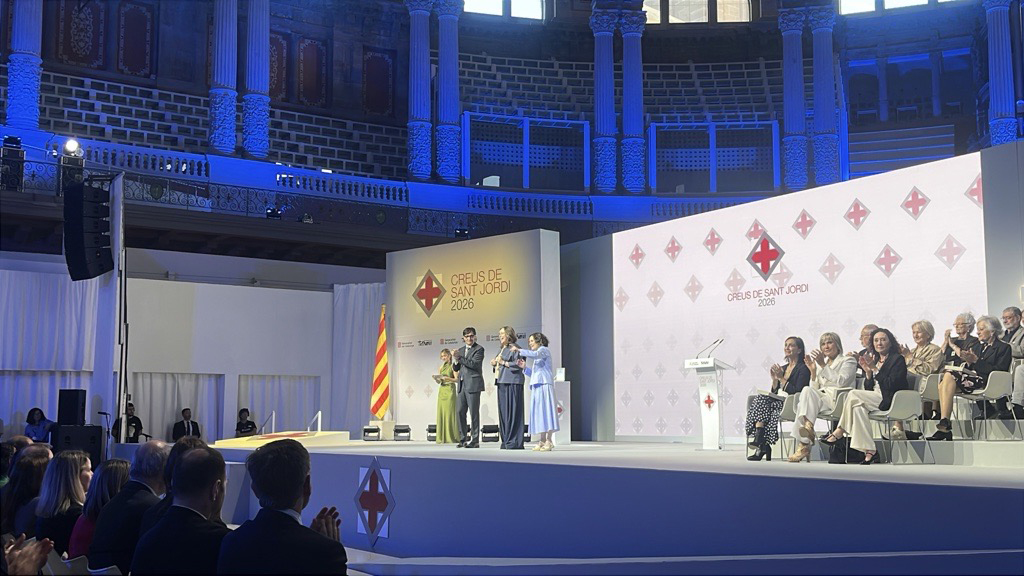
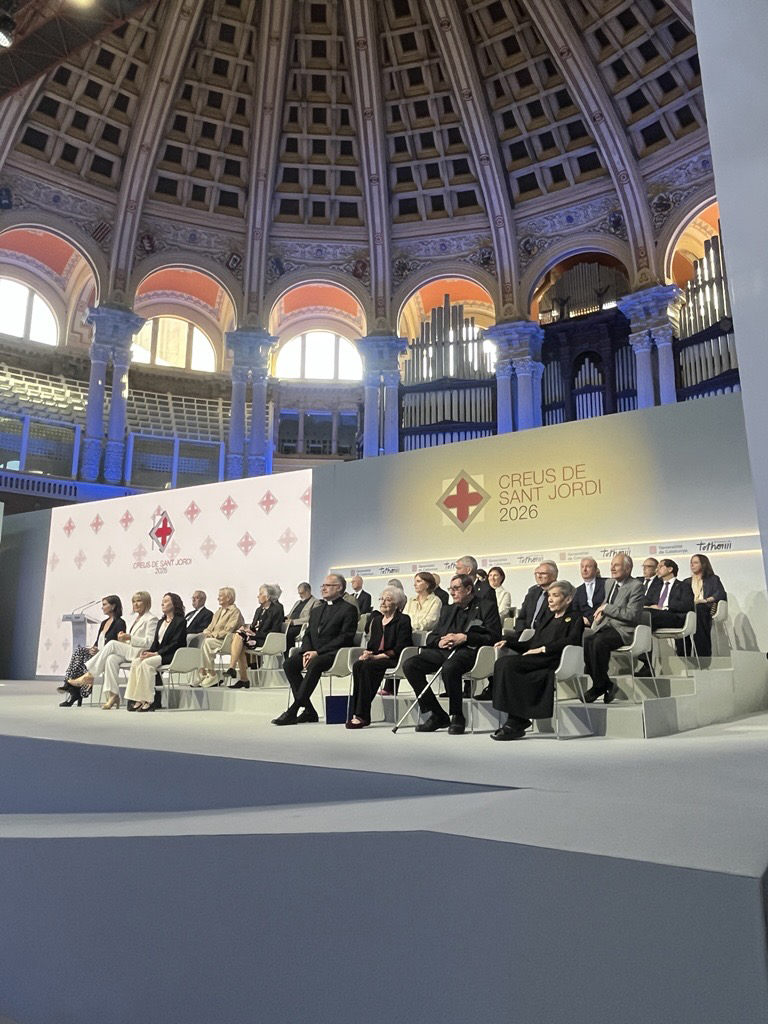
The nomination was promoted by the Barcelona Chamber of Commerce, and during the award ceremony, held on 21 April at the National Art Museum of Catalonia (MNAC), the Government emphasised her “outstanding business career and her commitment to culture and society”.
“A businesswoman with a degree in Economics and Business Sciences, possessing solid experience in corporate strategy and art collecting, she has promoted initiatives where the worlds of business, creativity, innovation, and sustainability interact and mutually enrich one another. The PLANTA project particularly stands out as an innovative space for dialogue between art, knowledge, and business, which has achieved significant international acclaim,” the institution added.
Leadership with a humanistic approach
A driving force behind Sorigué’s growth over the last decade, Ana Vallés Blasco has exercised a humanistic leadership model, closely linked to the social sphere, culture, and sustainable innovation.
This strategic vision has positioned the Sorigué name as an expert and trusted benchmark in all the areas where it operates; it has strengthened the Fundació Sorigué as a catalyst for the group’s commitment to giving back, and has promoted the PLANTA project as a symbol of the company’s values and future vision.
Since Ana Vallés assumed the presidency, Sorigué has maintained a solid upward trajectory, growing from a workforce of 1,500 in 2011 to 4,500 in 2025. This progress is the result of a strategy based on responsible growth, achieved by fostering talent, innovation, sustainability, and social return.
Over the past decade, the group has strengthened its position in new business areas such as urban services, the integrated water cycle, energy, and building construction, successfully tripling its turnover. This development is also reflected on a territorial level, providing value to citizens through projects executed across almost the entirety of Spain and establishing a presence in France and Portugal.
Key to these results has also been Ana Vallés’s commitment to integrating environmental policies across all business areas and the creation of an in-house innovation department, focused on projects related to the circular economy and energy efficiency.
Likewise, Sorigué’s leadership in equality policies stands out, demonstrated by the incorporation of people with disabilities into its workforce, support for highly vulnerable groups, and a commitment to hiring women in traditionally male-dominated sectors.
Art as a differentiating factor
Under the direction of Ana Vallés, the collection of the Fundació Sorigué has grown to exceed 450 works, consolidating its position as one of the most important in Europe. The institution promotes contemporary art as a tool for communication and awareness through exhibitions, loans, educational programmes, and collaborations with local and international entities.
The foundation’s effort to bring art closer to all audiences and use it as a tool for reflection has earned it several accolades, such as the prestigious “A” Corporate Collection Award 2025, granted by ARCOMadrid.
This innovative model of cultural patronage linked to the business fabric could not be understood without PLANTA, Ana Vallés’s most personal project.
Sorigué’s flagship and a symbol of the company’s values and future vision, PLANTA is where art, business knowledge, architecture, and landscape converge.
Commitment and future vision
In addition to serving as president of Sorigué and the Fundació Sorigué, Ana Vallés Blasco is also a member of Banco Santander’s Advisory Board for Catalonia, a consulting member of the Tarragona Chamber of Commerce, vice-president of the Fundació Joan Miró, a trustee of the Princess of Girona Foundation, a trustee and executive board member of the National Art Museum of Catalonia (MNAC), and a trustee of major cultural institutions such as the Barcelona Museum of Contemporary Art (MACBA) and the Museo Nacional Centro de Arte Reina Sofía, among others.
The Creu de Sant Jordi awarded by the Generalitat de Catalunya joins other significant accolades such as the Gaudí Gresol Award for Business Leadership from the Fundació Gresol (2024); the Carles Ferrer Salat Award for Social Commitment, granted by Foment del Treball (2021), and the International Women’s Entrepreneurial Challenge (IWEC) Award (Seattle, 2017), among many others.
Separately, in 2013, the group’s founder, Julio Sorigué, also received the Creu de Sant Jordi for his business activity and strong social commitment.
The highest institutional recognition
Since its creation in 1981, the Creu de Sant Jordi has highlighted commitment, integrity, and leadership as the pillars for building a fairer and more cohesive society, and it has consolidated itself as the most significant recognition in Catalonia’s institutional and cultural sphere.
In 2026, the Creu de Sant Jordi has rewarded the excellence of a total of 20 individuals and 10 entities, reflecting the richness and diversity of the fields represented, which range from science and business to the arts and thought.
The awardees include names such as Miquel Martí i Escursell, honorary president of the Moventia group; Ernestina Torelló i Llopart, owner of the Caves Torelló wine company; Miguel Agustín Torres i Riera, CEO of Bodegas Torres; philosopher Victoria Camps; artist Joan Fontcuberta, and journalist Júlia Otero i Pérez.
As for organisations, this year the Creu de Sant Jordi was awarded to the Official Association of Industrial Engineers of Catalonia, the Flors d’Urgell Choral Society, the Benissanet Music Band, the Fundació Ernest Lluch and the Universitat de Barcelona, among others.
Gallery