Sorigué Shares Its Experience in Biowaste Management for the Production of Clean Energy
Sorigué Reaffirms its Commitment to Urban Innovation at CIM...
Sorigué Joins ‘Chapter Clima’, Barcelona Global’s...
Go to press room Go to News
Sorigué Shares Its Experience in Biowaste Management for the Production of Clean Energy
December 10, 2025
The Institute for Agri-Food Research and Technology (IRTA) invited Sorigué as an expert in anaerobic digestion to discuss the present and future of biogas plants.
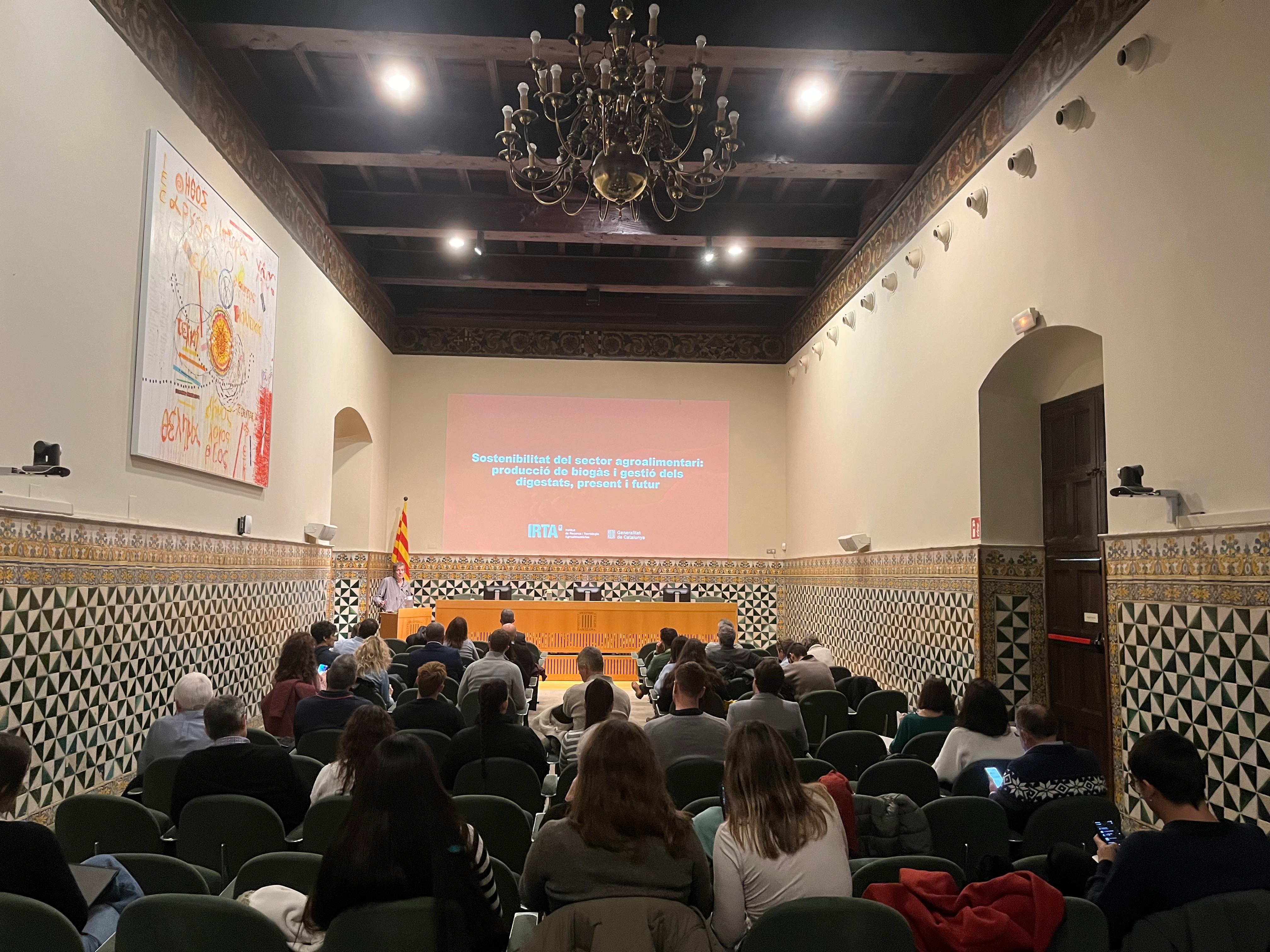
Sorigué took part in the conference “Sustainability in the Agri-Food Sector: Biogas Production and Digestate Management, Present and Future,” organised by the IRTA.
The event, held on 4 December at the Institute of Catalan Studies in Barcelona, brought together around 70 experts in anaerobic digestion to examine the social and environmental challenges involved in processing biowaste to transform it into clean energy.
More than just a scientific gathering, the meeting promoted by IRTA had a strong outreach focus and opened up discussion on the territorial implications of installing biogas plants in Catalonia.
Anaerobic digestion is a biological process that involves breaking down organic matter to produce biogas and digestate. The former is used to generate energy, while the latter can be reused as fertiliser.
Ongoing projects
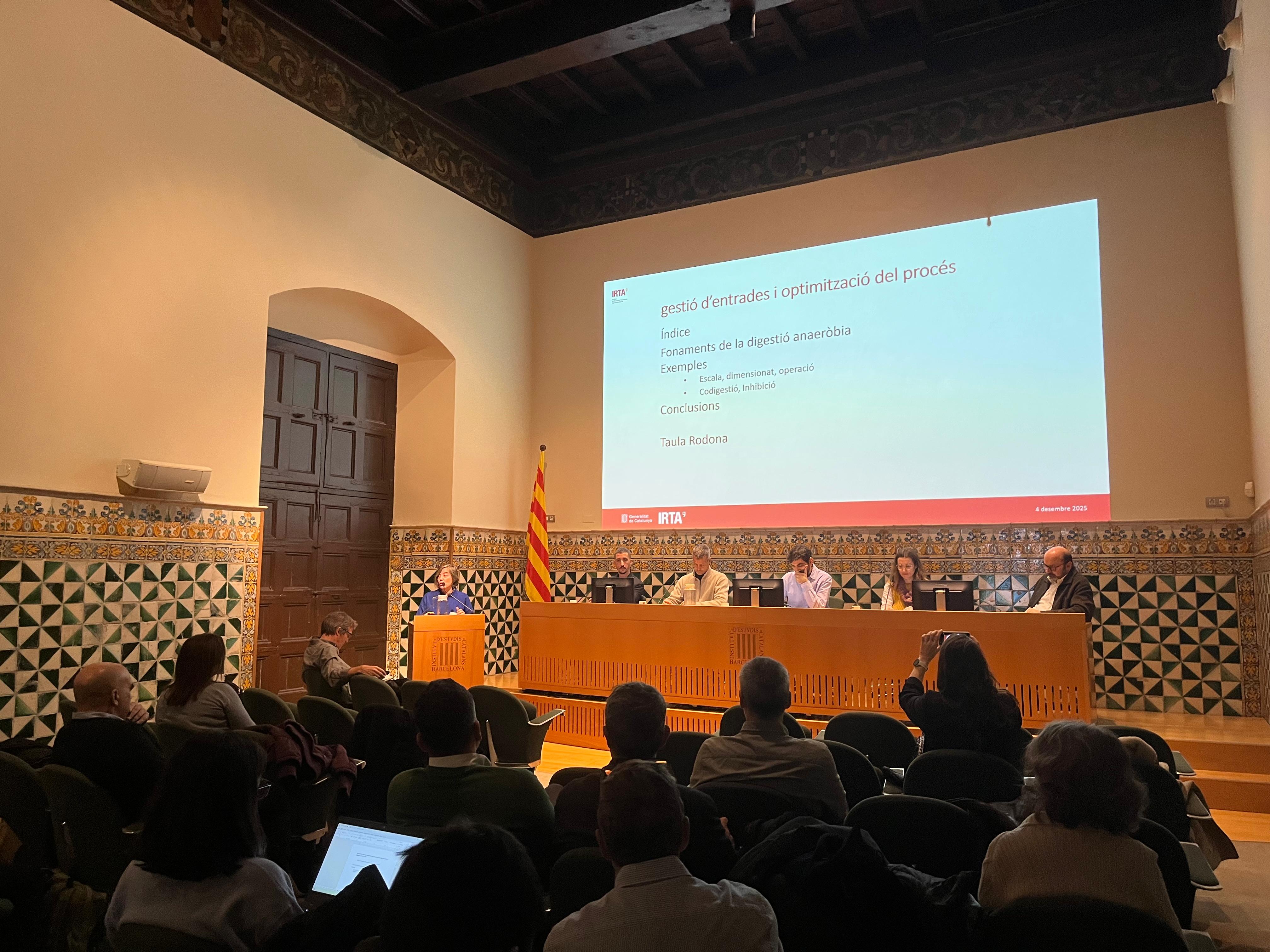
Beatriz Corzo, R&D&i project manager in Sorigué’s Innovation Department, spoke at the roundtable “Feedstock Management and Process Optimisation.” She shared the group’s expert perspective on various projects, including Noguera Renovables and Hidroterm.
Noguera Renovables is a company in which Sorigué holds a stake alongside Axpo Iberia and Torre Santamaría. The facility processes more than 70,000 tons of livestock slurry each year to produce biogas, which is then upgraded into biomethane suitable for direct injection into the natural gas grid.
As for Hidroterm, this is an innovation project involving Sorigué along with Remondis, Torre Santamaría, and IRTA. It investigates the combination of two techniques – anaerobic digestion and hydrothermal hydrolysis – to optimise biogas production in agro-industrial digesters.
“I loved sharing the perspective we have at Sorigué and the work we’re doing on the Noguera Renovables project, along with the other initiatives we’re promoting from the Innovation Department to address the everyday challenges we face at biogas plants,” said Beatriz Corzo.
Sludge transformation
On another front, Sorigué has been working for over twelve years with the sludge generated at Wastewater Treatment Plants (WWTPs, or EDAR in Spanish) to produce biogas, which is then converted into electricity.
The sludge from wastewater treatment is an extremely liquid residue that is placed in an anaerobic digester (without free oxygen) and subjected to temperatures of 36°C to 38°C until its energy value is recovered.
The resulting biogas powers engines that generate electricity for the self-consumption needs of the treatment plants themselves, in a fully circular process. In addition, the leftover sludge is considered stabilised and can therefore be sent to composting facilities or used in agriculture.
Currently, Sorigué is responsible for biogas production at the WWTPs in Vallbona de Anoia and Montornés del Vallés, both in Catalonia, each equipped with its own cogeneration plant for electricity.
Gallery