December 15, 2025
The XVII Spanish Biennial of Architecture and Urbanism awards the open system for sustainable building regeneration designed by UPC and Sorigué
Shopping Promenade Lleida awards construction contract to...
Sorigué Presents Its Innovative Proposals for Smart Water...
Go to press room Go to Press notes
The XVII Spanish Biennial of Architecture and Urbanism awards the open system for sustainable building regeneration designed by UPC and Sorigué
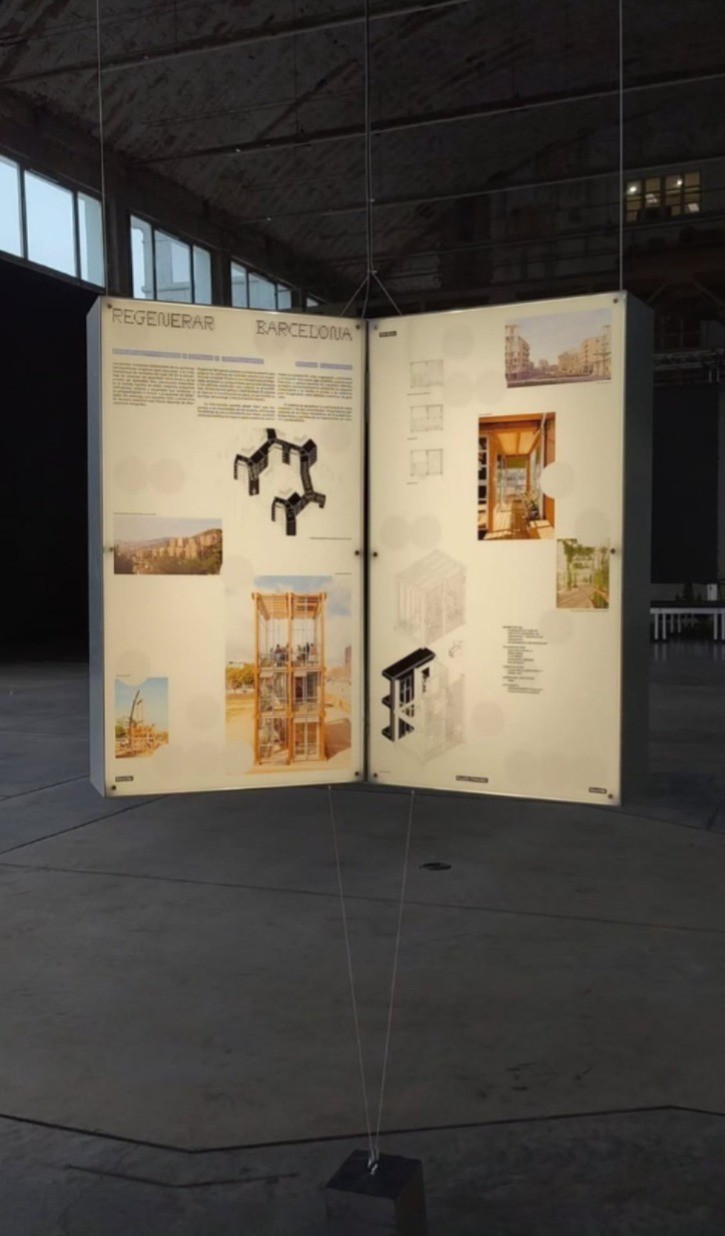
The proposal “Regenerar Barcelona” has won an award at the “XVII Spanish Biennial of Architecture and Urbanism (BEAU). Common Flows, Response to a Hyperconnected Territory,” which opened in Ponferrada, León, on 11 December.
Under the motto “Architecture as a Policy of Change,” the Biennial invites reflection on how the discipline can actively contribute to building a fairer and more sustainable future. It focuses on the responses that recent Spanish architecture is providing to “an increasingly connected world.”
In this edition, the jury awarded 23 national and international architectural works in the Panorama of Works section, as well as recognising 42 research projects and 20 degree final projects.
“Regenerar Barcelona” is one of the award-winning proposals that will be featured in the Biennial’s travelling exhibition over the next two years.
Innovative infrastructure
The exhibition will showcase the research developed by members of the REARQ group, researchers from the GICITED group, and the company Constraula (part of Sorigué). They summarise the project as follows:
Large residential estates on the metropolitan periphery emerged as political responses to the mid-20th-century housing crisis. Over the years, cities have expanded around these areas, integrating them into the urban fabric. However, despite their new centrality, these neighbourhoods continue to suffer from spatial and social deficiencies that fuel negative perceptions and keep them under constant threat of demolition.
These estates face complex challenges – ageing building stock, inadequate infrastructure, social vulnerabilities, and environmental demands –that cannot be solved with simple solutions. They require multiscale and open approaches: strategies to repair, protect, update, re-equip, renaturalise, and expand both dwellings and shared spaces in line with current socio-urban and ecological needs.
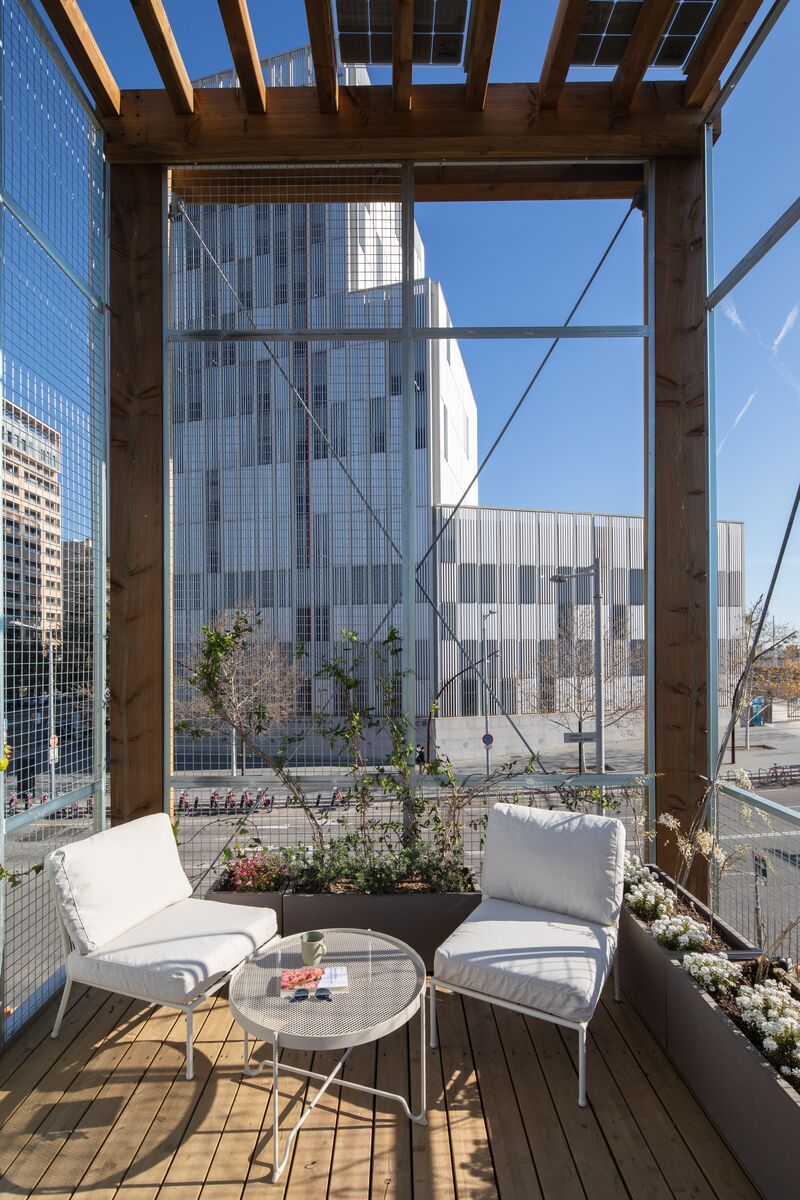
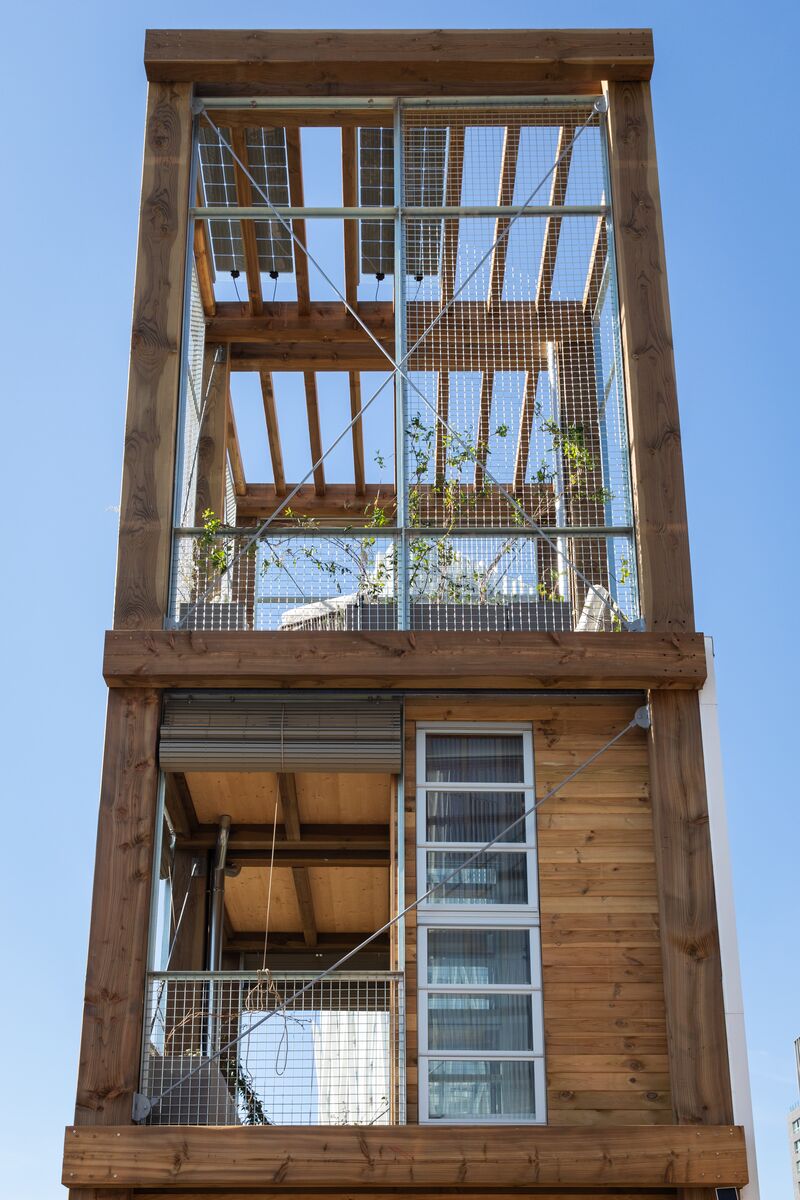
Regenerar Barcelona proposes a new framework for ambitious, ecological, and adaptable regeneration. It is based on an innovative infrastructure attached to existing buildings: a modular, self-supporting wooden structure designed as an open system.
This flexible framework allows for additions and extensions, responding to the diverse needs of residents and enabling transformations over time. The project builds a full-scale prototype that is being monitored to explore how these systems could be extended across metropolitan housing estates.
Its collaborative approach brings together academia, public administration, neighbourhood associations, and the construction sector, combining technical knowledge with citizen participation.
The open structure improves accessibility by creating generous connections and strengthening common spaces. It also increases the energy efficiency of the buildings through several protective layers: an external solar filter that acts as a bioclimatic façade, and interior extensions that allow growth and adaptation, creating new intermediate spaces.
The system is based on dry construction, prioritising reversibility, easy disassembly, and minimal waste generation. By using wood as the main material and leveraging modularity and repetition, it facilitates industrialised prefabrication and adaptation to different buildings and urban contexts.
In short, this project aims to improve living conditions and ensure that these housing estates – and the communities they house – remain essential to the city’s urban metabolism and become central, resilient actors in building Barcelona’s sustainable urban future.
REARQ Research Group – UPC
The REARQ research group was born out of the growing need for coordinated and comprehensive intervention in built heritage. Rehabilitating, restoring, reusing, recycling, diagnosing, and ultimately intervening in existing buildings to improve and adapt their conditions – and thereby enhance people’s quality of life – are becoming increasingly complex and diverse activities, with a growing demand that is likely to continue evolving in the near future.
Sorigué
Sorigué is a business group with 70 years of experience, committed to society and the environment. It focuses on sustainability, talent management, and innovation through its activities in Water, City, Industry, Infrastructure and Materials, Building, and Energy. The company always seeks solutions that add value for its clients with the aim of sharing its knowledge.
Gallery