Sorigué Promotes its Sustainable Innovation Approach at National and International Levels
PLANTA has been recognised as the Best Artistic Initiative...
Sorigué Reaches the Final of the National Acex Awards for...
Go to press room Go to News
Sorigué Promotes its Sustainable Innovation Approach at National and International Levels
June 30, 2025
Stockholm, Girona, and Pamplona were the primary venues visited during the month of June to showcase various research projects that leverage internal synergies within the business group.
Throughout June, Sorigué’s Innovation Department attended several high-level academic events, reaffirming its commitment to research and the development of sustainable solutions.
The first event took place on 18 June at the conference “Circular Management of Membranes for Water Treatment,” held in Girona, Spain. The second was the 7th Conference of the International Water Association (IWA), Eco-STP 2025, held in Stockholm, Sweden, from 23 to 26 June. Finally, on 26 and 27 June, the IDeas conference on innovation took place in Pamplona (Spain) under the theme “Innovative Solutions for Water Challenges.”
“People attending these events are often surprised by the number of projects we have at the European level and the variety of topics we work on. In the end, since the Innovation Department is cross-functional and Sorigué is such a diversified business group, we ensure that knowledge from different areas feeds into all our projects,” explains Zulema Borjas, R&D+i manager in the Innovation Department.
Teresa de la Torre, also an R&D+i manager in the department, adds: “The different business areas have a portfolio of nature-based solutions that, as a group, we can implement ourselves – such as green infrastructure, green roofs, vertical gardens, and so on. In this sense, these outreach events allow us to go beyond promoting a specific project and introduce ourselves on a broader, global scale.”
Wastewater treatment
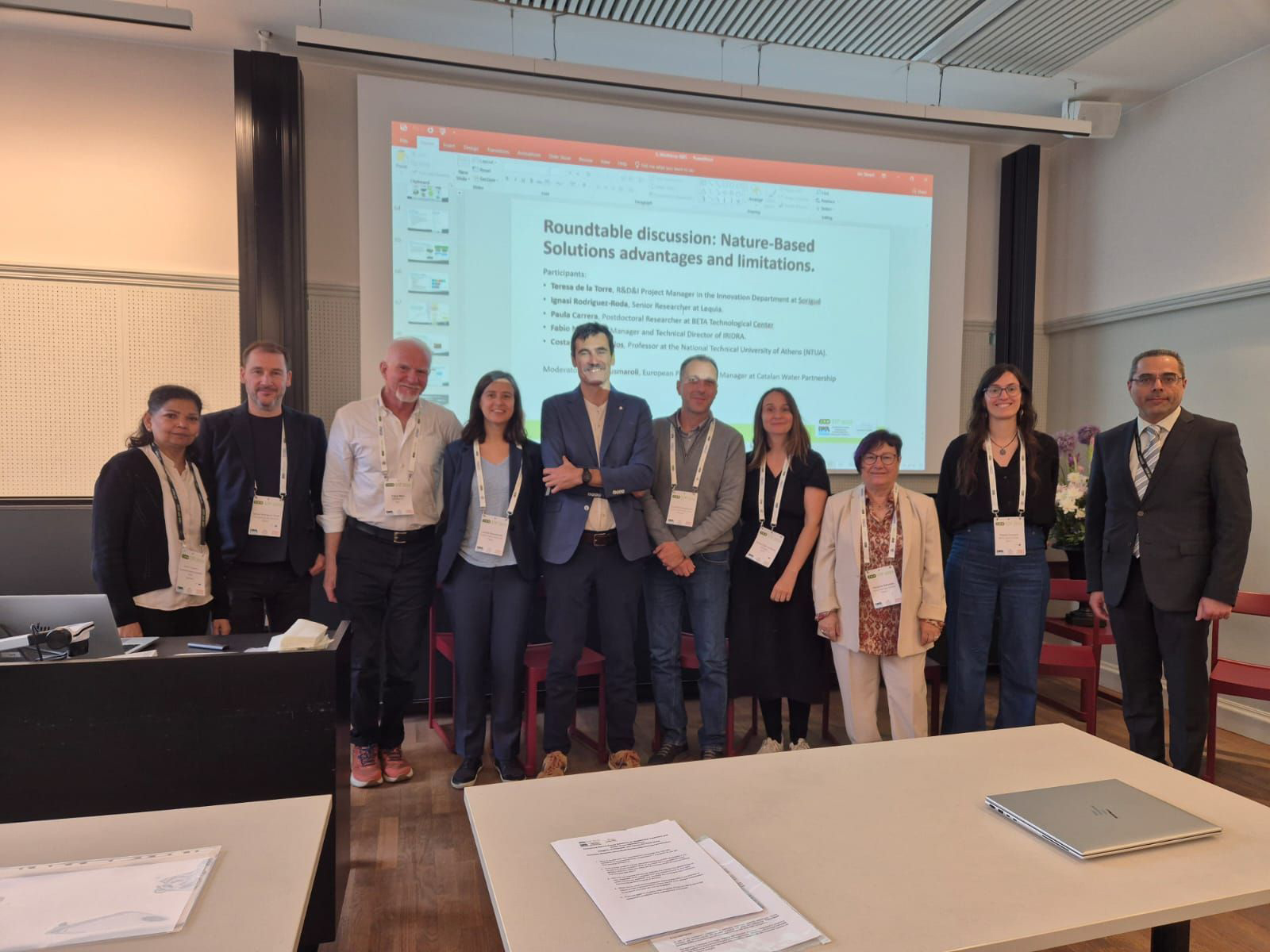
During the Eco-STP 2025 conference in Stockholm, Sorigué presented two projects: Water-Mining: Focused on exploring new technologies for wastewater treatment; and BIODAPH2O: Which studies the use of microorganisms in the final stage of wastewater treatment to improve effluent quality and reduce environmental impact.
Teresa de la Torre presented the results from the various treatment trains tested over the four years of the Water-Mining research. This European project saw Sorigué design and build a pilot plant at the La Llagosta Wastewater Treatment Plant (WWTP) in Catalonia.
She also participated in a roundtable on nature-based solutions (NBS), where she introduced the Biodaph project. This project is currently undergoing real-world testing at the Quart Wastewater Treatment Plant (WWTP) in Girona, also managed by Sorigué.
Biofuel production
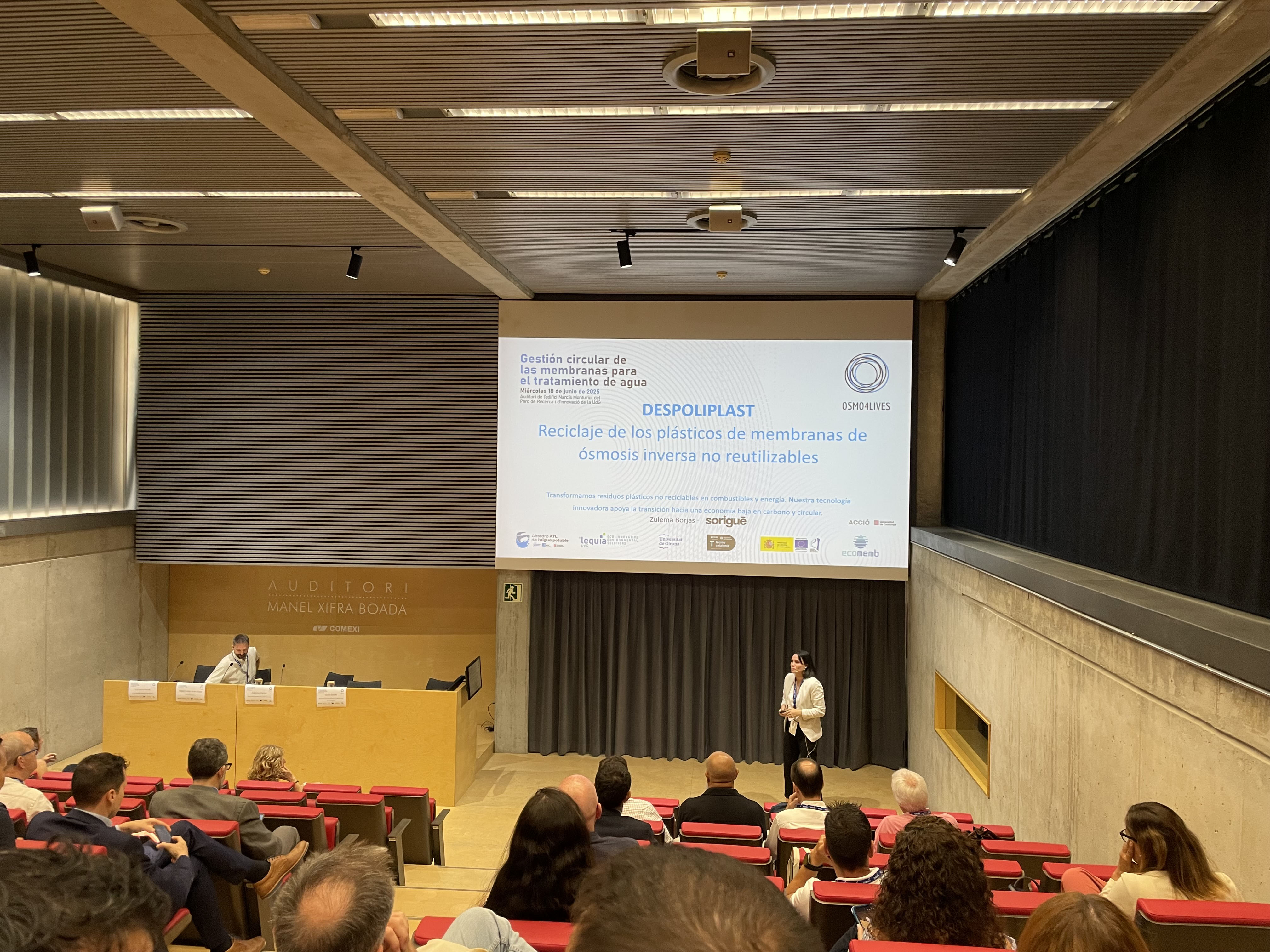
Zulema Borjas presented progress on the Despoliplast project at the “Circular Management of Membranes for Water Treatment” conference in Girona. This research explores the potential to produce recycled carbon fuel from non-reusable plastic components – such as those from vehicle dismantling – and used reverse osmosis membranes from water desalination processes. Testing is currently underway at a pilot plant built by Sorigué at Noguera Renovables’ facilities.
During the event, “it made a big impression that the technique we’re studying offers a different approach from the usual ones, which are based on chemical compounds,” Borjas explains.
For an audience specialised in manufacturing, recycling, and regenerating reverse osmosis membranes, Despoliplast represents an opportunity to explore new alternatives for the more than 1.5 million membranes estimated to end up in landfills or incinerators this year.
Improving wastewater effluents
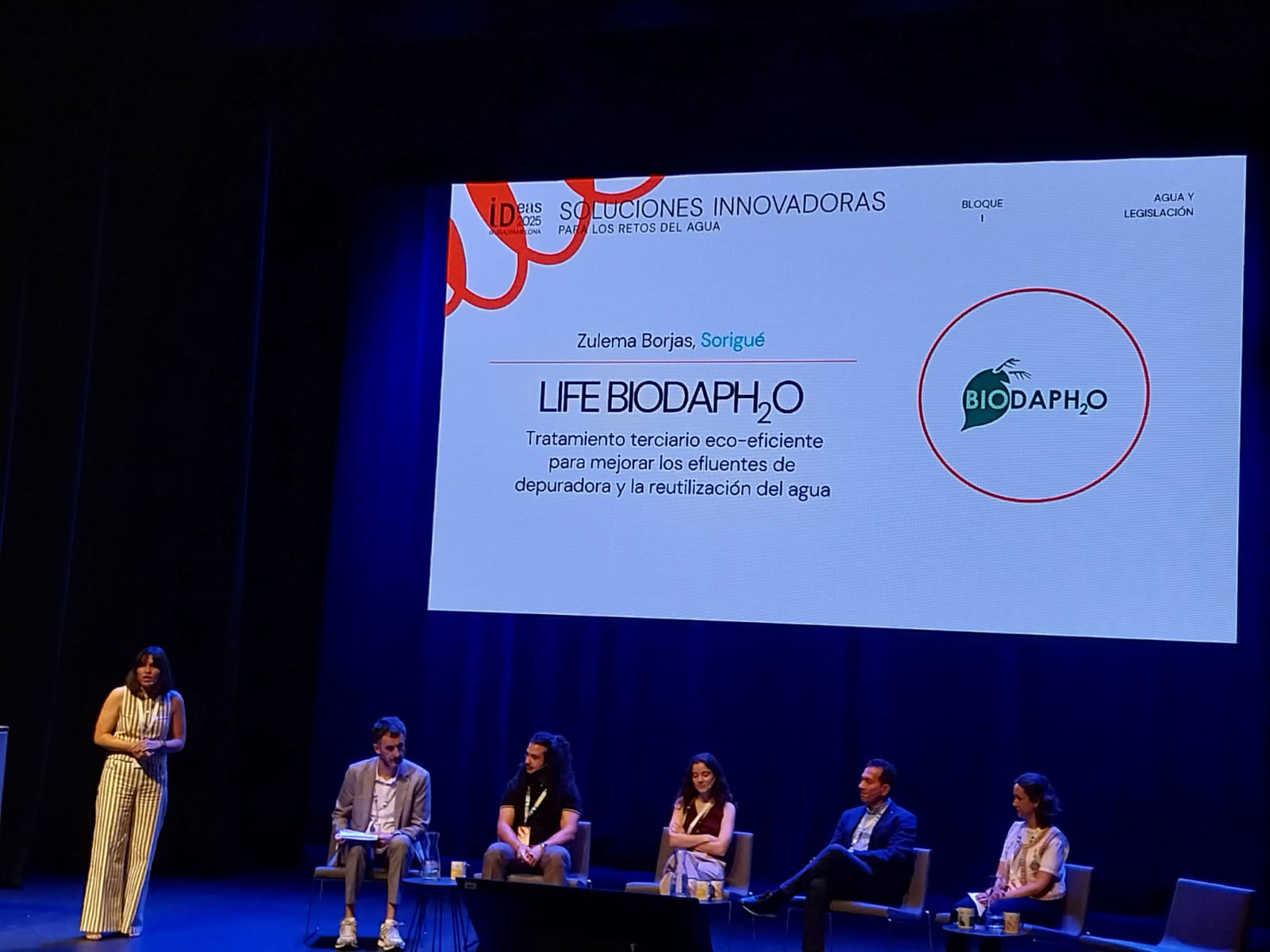
The “Innovative Solutions for Water Challenges” event in Pamplona served as the second platform for the Innovation Department to present advances in the Biodaph project.
Using small crustaceans such as water fleas (Daphnia), microalgae, and microbial biofilms, BIODAPH2O aims to investigate the absorption capacity these microorganisms can provide to enhance the quality of water discharged from wastewater treatment plants.
The conference helped raise the project’s visibility, highlighting its potential for industrial-scale application and the positive impact it could have on communities near wastewater treatment plants, which are the main recipients of the treated effluents.
With a highly positive outcome from the scientific events attended in June, Sorigué’s Innovation Department continues to promote the projects it works on in partnership with educational institutions and research centres. Notably, this includes close collaboration with entities such as the University of Girona (UdG), the Catalan Water Partnership (CWP), the BETA Technology Centre at the University of Vic, and the Environmental and Industrial Applications of Catalysis group at the Universitat Rovira i Virgili, among many others.
Gallery